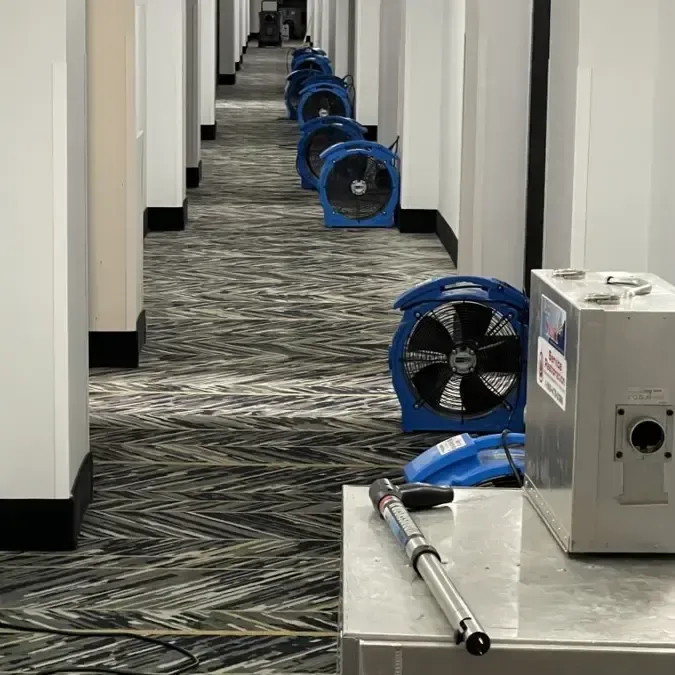
A water loss in a business is a double problem: the building is damaged and the doors may have to stay shut. The city is a regional employment center with about 20,000 jobs, from the Bay Street shops to the Emeryville Public Market, so many tenants share walls, floors and plumbing. This article lays out what to document, what dries first and how a space can reopen in stages.
Key takeaways
- Stop the water source first, then tell the property manager and your own team in writing.
- Protect stock, files and equipment by lifting them clear of wet floors before extraction starts.
- Keep a downtime log and an inventory of damaged items from the first day.
- Drying priorities follow customer areas, equipment rooms and walkways, not the biggest wet patch.
- Staged drying and containment can let part of a space reopen while other areas are still being worked.
Why business water losses are different
A home can pause while repairs happen. A shop or office usually cannot without losing income, which changes how the work is planned.
Commercial spaces also tend to share walls, ceilings and pipes with neighbors. A broken pipe in one suite can reach three others before anyone arrives in the morning.
Landlords and tenants often split responsibility for different parts of a space. The tenant may control the suite while the owner controls the roof, risers and shared drains, so knowing the lease terms early helps when a loss happens.
Business losses also include things a home does not have, such as inventory, point of sale equipment and customer records.
- Larger floor areas and longer wet paths
- Carpet tile, drywall partitions and suspended ceilings that hold water
- Shared building systems controlled by a landlord
- Customers, staff and deliveries that need a safe route through
The first steps for a tenant or manager
Start by stopping the water, if it can be reached safely. Know where the suite shutoff is before an emergency, because finding it in a flooded room is slow.
Next, make the space safe. Turn off power to wet areas at the breaker if it can be done without standing in water.
Tell staff who is in charge of the response. A clear point of contact avoids mixed messages between employees, the manager and the restoration team.
If customers are present, close the affected area with tape or signs and move them to a dry part of the space. Safety comes before keeping a sale going.
- Close the main valve for the suite or ask the manager to close the building valve.
- Lift stock, paper files and electronics onto shelves, tables or plastic.
- Photograph everything before it is moved.
- Send the landlord or manager a written note describing what happened.
- Keep customers and staff out of wet or slippery areas.
What to document for the business
Good records speed up repairs and any later conversation about losses. Start the paperwork on day one, while details are fresh.
The restoration team will keep its own moisture readings, but those do not cover the business side.
Damage records
- Dated photos and video of every wet room
- A room by room list of damaged fixtures, stock and equipment
- Serial numbers for electronics that got wet
Records of lost time
- The date and hour the space closed
- Staff scheduled and hours lost
- Orders, appointments or events that had to be moved
Which areas dry first
Drying order is based on what gets the space working again, not on which spot looks worst. Extraction removes standing water from floors, then moisture readings show which walls, ceilings and subfloors hold water.
Customer entrances, restrooms, equipment rooms and main walkways usually come first. Storage areas and back offices follow.
Suspended ceiling tiles that have soaked up water often have to be removed, while the grid and the cavity above them get dried.
Because the space is large, a drying plan often has several zones. Each zone gets its own equipment and readings, so the manager can see which parts are done.
Carpet tile can sometimes be lifted, dried and reused, while wall to wall carpet that soaked through may not be worth saving. The team can explain which choice makes sense for each room.
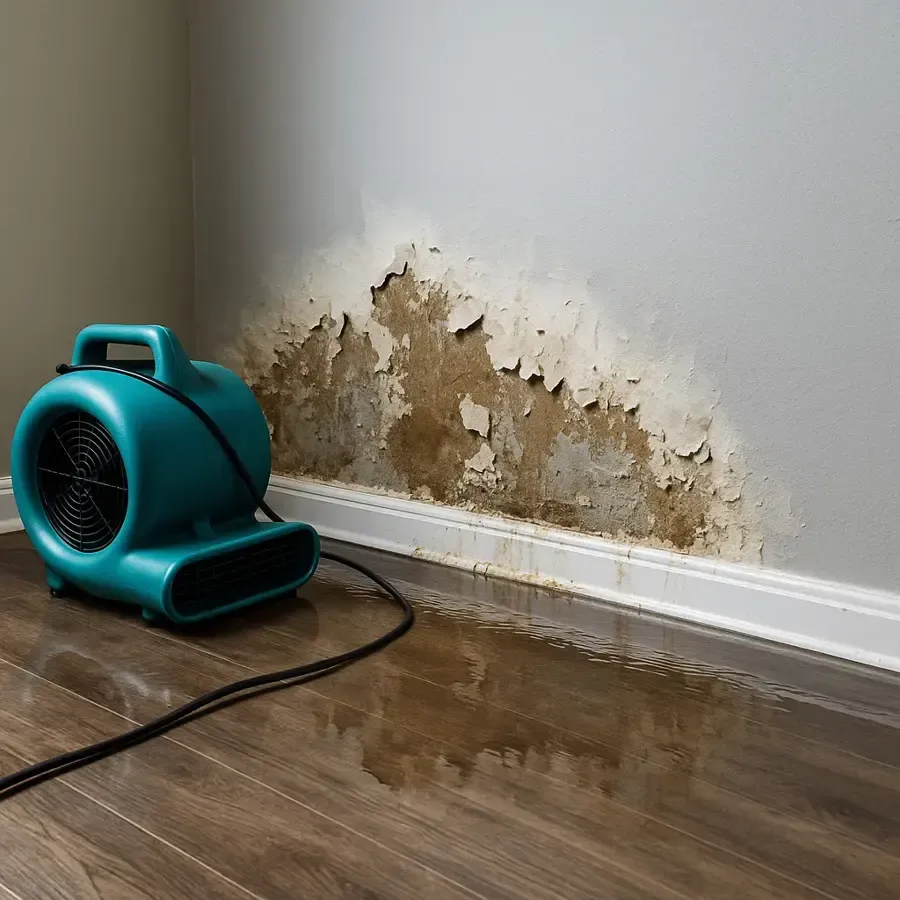
How structural drying lets a space reopen in stages
Structural drying treats the building materials, not just the visible water. Equipment moves warm dry air across wet surfaces while dehumidifiers pull moisture out of the room.
In a larger suite, the team can set up containment so wet and dry zones are separated. That can let a front counter or a few desks reopen while the back section is still being worked.
The structural drying team repeats moisture checks at each visit. Work ends when readings return to normal for each material, since damp materials left closed in can lead to mold.
Ask for a simple schedule at the start. Knowing which area will be clear on which day lets the business plan staff, deliveries and customer visits around the work.
Keep the written drying record with business papers. It supports the story of what happened if a landlord or insurer asks questions later.
Restrooms, break rooms and server closets deserve a second look because they have their own plumbing and equipment. A small leak in one of them can go unnoticed until it affects the floor below.
- Plastic barriers to split wet and dry zones
- Equipment placed so cords and hoses stay out of walkways
- Scheduled checks, so the manager knows when each area is clear
- A written drying record to share with the landlord
When the cause is a pipe or a drain
A split supply pipe and a backed up drain need different handling. Clean supply water can usually be dried, and the burst pipe water damage page covers how a leak inside walls and ceilings is traced.
Sewage is another matter. It counts as contaminated water, so porous materials such as carpet and drywall usually come out, and the space is cleaned and treated.
See the sewage backup cleanup page for that process.
Either way, the faster the source is stopped and the water removed, the smaller the loss for the business.
Getting ready before a loss happens
A short plan written ahead of time makes the first hour of a loss far calmer. It costs little and can be reviewed by the whole team.
The commercial water damage page describes how larger losses are handled from first visit to final readings.
- Mark the suite water shutoff on a floor plan and post it where staff can see it.
- Keep a current list of equipment and stock values.
- Store key files off the floor and in sealed containers.
- Know who at the property management company to notify.
- Save the names of two or three vendors for plumbing, cleanup and drying.
Questions
Who should I contact first after a pipe breaks in my suite?
Shut the water off if you can, then notify the property manager in writing, and then a water damage team. Photograph the space before anything moves.
Can my business stay open during drying?
Sometimes. Containment can separate dry areas from wet ones, but safety, power and air quality decide what is practical.
Do I have to throw out wet inventory?
Not always. Items that can be dried or cleaned may be kept, but contaminated or heavily soaked stock may not be. Document it before disposal.
What if the water came from a neighbor's suite?
Record the damage and tell the manager. The cause of a shared building leak affects who is responsible for repairs.
How do I know drying is complete?
The team takes moisture readings of walls, floors and ceilings. Drying is done when they match normal levels for those materials.
Should I tell customers about a water loss?
Be honest and brief. Explain which areas are closed and when you expect to reopen, without guessing at details.