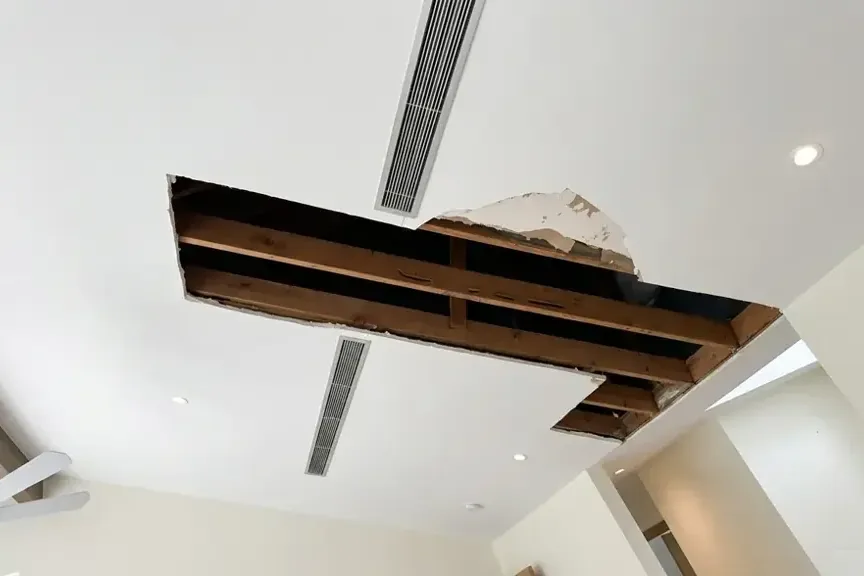
A brown ring on the ceiling or a steady drip over the sofa is a common surprise in a stacked building. Water rarely stays where it starts, so the stain you see can sit far from the real source. This article explains how condo and loft owners can trace the leak, record it properly and get the ceiling dried before the damage spreads.
Key takeaways
- Shut off power to ceiling lights near the wet area and keep people out from under any bulge.
- Photograph the stain with dated pictures and mark its edges so growth can be shown later.
- The wet spot is often not below the source, because water travels along framing before it drops.
- Tell the building manager early, since a shared stack or roof drain may be the cause.
- A wet ceiling cavity needs opening, extraction and measured drying, not just paint over a stain.
Why ceiling leaks are common in stacked buildings
Much of the city's housing grew out of redevelopment. The former Santa Fe and Key System rail yards and the Shellmound corridor became shopping and multi unit residential districts by the 1990s, and the Watergate marina area added a residential condominium community.
Stacked homes share floors, ceilings and plumbing runs. A problem in one unit can drip into the one below within a short time.
Water follows the easiest path. It runs along pipes, beams and drywall seams before it finds a low spot to drip from.
Ceilings also hide a lot. Between the drywall below and the floor above sits a joist bay holding framing, wiring, insulation and sometimes ducts or pipes.
Water that collects there can sit for days before it finds a way through, so a small stain can mean a large wet area. That is why the visible mark is only a starting point.
In a compact city, shared walls are normal rather than unusual. Knowing how a leak behaves is useful for anyone who owns or rents in a building like this.
- A supply pipe or valve failing in the unit above
- A tub or sink overflowing while nobody is home
- A dishwasher or washer hose letting go
- A water heater closet leaking through its floor
- A balcony or roof drain backing up into the structure
What to do when the ceiling starts to drip
The first few steps are about safety and limiting spread. Do them in this order before worrying about who is at fault.
A ceiling that bulges or sags is holding water. Stay out from under it and keep family members and pets away until the drying team can release it in a controlled way.
If water is coming through a light fixture, leave the switch alone and use the breaker instead. Water and wiring together are the biggest risk at the start of a leak.
Do not poke holes in the ceiling to let the water out unless a professional says so. A hole in the wrong place can bring down wet insulation and drywall all at once.
- Turn off the breaker for any ceiling fixture or fan in the wet area.
- Move rugs, electronics and furniture out from under the stain.
- Set a bucket under any steady drip and lay towels around it.
- Open nearby cabinet doors if water runs down a wall.
- Contact the building manager or association so the unit above can shut its water off.
Finding which unit the water comes from
Tracing the source saves time and arguments. A ceiling leak water damage team uses moisture meters to follow the wet path, but an owner can gather useful clues first.
The ceiling leak water damage services page explains how that tracing works in practice.
Clues inside your own unit
Check whether the stain grows when a neighbor runs a shower or washer. Note whether the drip is steady or only appears at certain times of day.
- A stain below a bathroom often points to a tub, toilet or supply pipe.
- A stain near an outside wall can point to a balcony or roof drain.
- A stain that appears only after rain points away from plumbing.
Talking with the neighbor and the manager
Keep the first conversation about the water, not about blame. Ask the neighbor to check under sinks and around the water heater, and ask the manager whether other units have reported the same thing.
A shared stack or a common roof drain affects several homes at once, which changes who handles repairs.
What to photograph and write down
Records protect an owner whatever the cause turns out to be. Take pictures before anything is moved, then again as the work progresses.
Keep a short written log with dates and names, so later questions about timing have clear answers.
Ask the unit above to photograph what they find as well. Matching pictures from both sides make it easier for everyone to agree on what happened.
Keep copies of any messages with the manager. If the cause turns out to be a shared pipe or roof drain, those messages show when the problem was first reported.
- Wide and close photos of the stain, with a pencil outline around its edge
- Photos of wet carpet, flooring, cabinets and wall surfaces
- A list of damaged belongings with rough age and value
- The date and time each person was contacted and what they said
- Receipts for anything bought for the emergency
How a wet ceiling cavity gets dried
Painting over a stain leaves wet material hidden above it. A proper job starts with water extraction from floors and any pooled water, followed by opening the ceiling where readings show moisture.
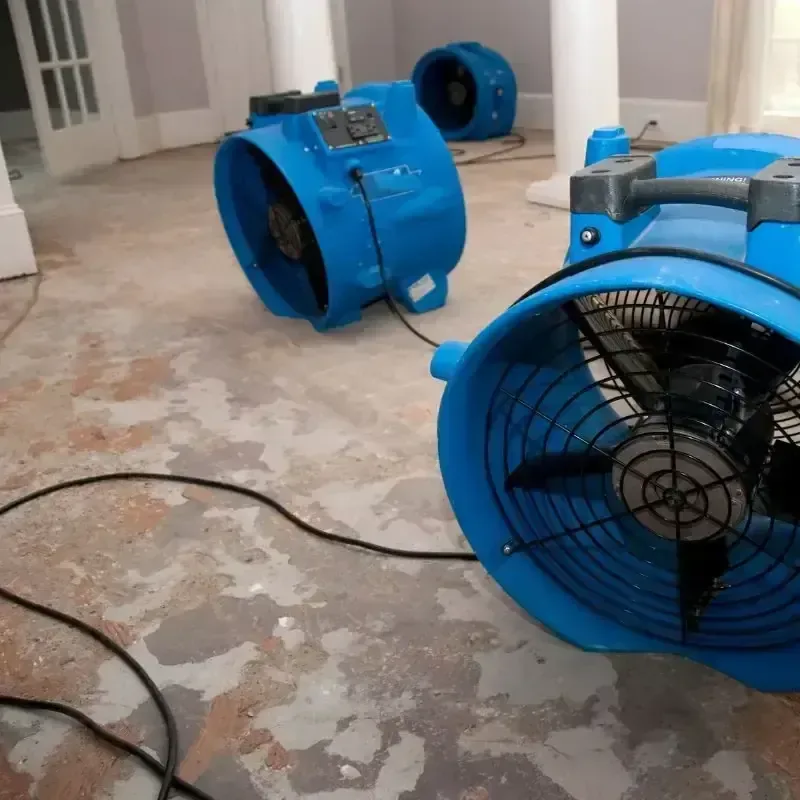
Wet insulation is pulled out, and the cavity between the joists is left open to air. Drying equipment then runs while the team takes readings each visit.
The structural drying process is finished when the readings return to normal for the materials, not when the surface looks dry. Damp cavities left closed for a day or two invite mold, which is why speed matters.
The opening is cut larger than the stain on purpose. Water spreads sideways inside the cavity, and the team needs to see where the wet material ends.
Once the cavity is dry and the source is repaired, new insulation and drywall go back in. Finish work such as texture and paint comes last, after the readings are clear.
- Extraction of standing water first
- Controlled opening of the wet ceiling section
- Removal of soaked insulation and soft drywall
- Equipment placed to move air through the open bay
- Repeat moisture readings until the framing is dry
When the water is dirty or reaches a shop below
Not every ceiling leak is clean water. A backed up drain or toilet above sends contaminated water down, and that is handled differently, with porous materials usually removed rather than dried.
Mixed buildings sometimes have a shop or office under the homes. When a leak crosses into that space, commercial water damage work covers the business side, including keeping part of the space usable.
Who pays for repairs depends on the building's governing rules and policies. The association or manager can explain how a claim works in that building.
Getting ready for the next leak
Most ceiling leaks in stacked buildings repeat when the cause is a worn part. A few habits make the next one easier to catch early.
Owners can also share simple tips with neighbors, since a leak in one unit is a problem for everyone below it.
- Learn where the unit shutoff valve is and make sure it turns.
- Check the hoses behind the washer and dishwasher for bulges or cracks.
- Look under bathroom sinks for damp cabinet bottoms.
- Ask the manager how roof and balcony drains are inspected.
- Keep the building manager's contact details somewhere easy to find.
Questions
How can I tell if a ceiling stain is from a plumbing leak or the roof?
A stain that grows when neighbors use water points to plumbing above. One that appears only after rain points to a roof, balcony or exterior drain.
Should I cut open the wet ceiling myself?
Leave it to the drying team. A bulging ceiling can release a lot of water at once, and wiring may be nearby.
Is the unit above always responsible for the damage?
Not always. A shared stack, a common drain or the roof may be the cause, so ask the manager before assuming.
How long does a wet ceiling take to dry?
It depends on how much material is wet and how open the cavity is. Moisture readings, not a calendar, tell the team when the framing is done.
Can I just repaint after the drip stops?
Paint hides the stain but not the moisture inside. Wet insulation and drywall need removal or drying first.
What should I do if the neighbor above is away?
Tell the manager right away so the unit shutoff can be closed. Do not enter another unit without permission.