Wastewater rising in a tub, floor drain or toilet is alarming, and the first practical question is who owns the pipe that failed. In Piedmont the answer can be the city or the homeowner, depending on where the blockage sits. This article explains the difference, who to contact and how contaminated water is cleaned up safely.
Key takeaways
- Stop using water in the house and keep people and pets away from affected rooms.
- The property owner is responsible for maintaining the entire private sewer lateral.
- Suspected backups in the public sewer should be reported to the city, which has staff on call around the clock.
- Sewage is contaminated water, so porous materials often need removal rather than drying.
- Grease, oil and fats washed down drains can cause backups in homes and in city pipes.
What a sewage backup looks like
Backups often start small. A toilet that gurgles, a tub that fills when the washer drains or a floor drain that bubbles are early signs.
Once wastewater reaches a floor, the situation becomes a contamination problem as well as a plumbing one.
A backup can also come up through the lowest drain in the house, which is often in a laundry room or garage. Check those spots after any slow drain at an upstairs fixture.
Time matters because contaminated water soaks into porous materials quickly. The sooner it is removed, the less has to be thrown away.
- Several fixtures draining slowly at once
- Gurgling sounds from toilets or drains
- Wastewater in a tub, shower or floor drain
- A sewage smell near cleanouts or low drains
Public sewer or private lateral
Piedmont Public Works maintains the city sanitary sewer system and responds to emergencies. Wastewater is conveyed to the EBMUD main wastewater treatment plant.
Private laterals make up approximately 50 percent of the sanitary sewer system. The property owner is responsible for maintaining the entire private sewer lateral.
That means a blockage on the house side belongs to the owner, while a problem in the main under the street belongs to the city.
It also helps to know the age of a house when judging the odds. A lateral that has served a home for many decades may have roots or cracks, but nothing here says what any particular pipe is made of, so a camera inspection is the way to find out.
A Consent Decree with the U.S. EPA and the State of California requires Piedmont to keep updating its sewer infrastructure. That work covers the city side, while private laterals stay with their owners.
Signs the problem is in the public sewer
- Neighbors report backups at the same time
- Wastewater rises in the lowest fixtures first
- A plumber clears the lateral and the backup returns anyway
Signs the problem is in the private lateral
- Only your home is affected
- A camera inspection finds roots, a break or a belly in the pipe
- Clearing the lateral stops the backup
Who to contact
Visible or suspected sewage backups in the public sewer should be reported to the city, which has staff on call around the clock. Making the report early helps the city clear the main before more homes are affected.
For a backup inside the house, a restoration team handles the cleanup. The sewage backup cleanup page describes how that process works for local homes, and the toilet overflow cleanup page covers the single fixture version.
A plumber deals with the blockage itself. Cleanup and plumbing are separate jobs and usually done by different teams.
When you call the city about a suspected public sewer backup, describe what you see and which fixtures are affected. That helps crews decide whether the main under the street needs clearing.
After the report, do not run water. Every flush or load of laundry adds to what is already coming up.
How sewage cleanup works
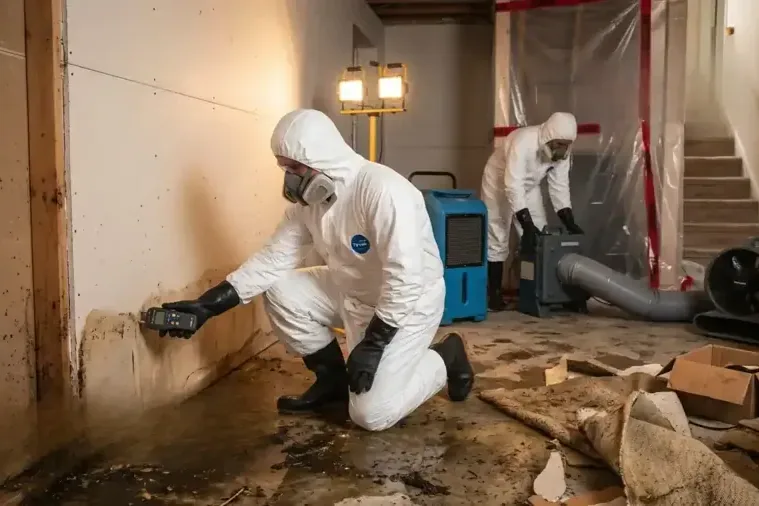
Wastewater is treated as Category 3 in any sewage backup cleanup, meaning it can carry harmful organisms. The team wears protective gear and sets up barriers so the rest of the house stays clean.
Porous materials that absorbed the water, such as carpet, padding and soft drywall, are usually removed. Hard surfaces are cleaned and treated, then dried.
Disinfection is done after the contaminated material is gone. Surfaces are cleaned first, because treatment products work on clean surfaces better than on dirty ones.
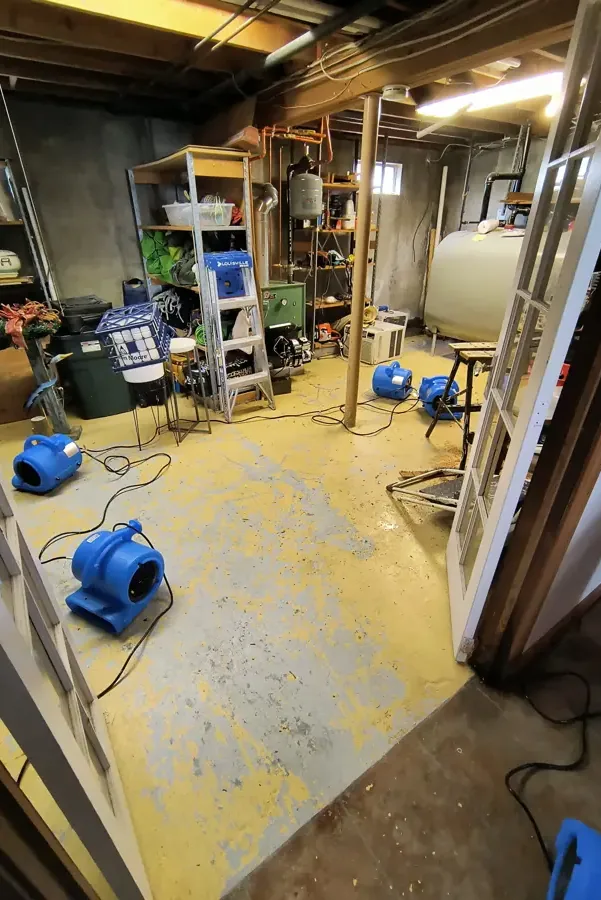
Drying equipment is used after cleaning, not before. Running fans over sewage would spread contamination through the house.
Fixtures such as toilets, tubs and sinks are cleaned and treated as well, since they were part of the path. Cabinet bases and wall bottoms touched by the water are checked with moisture meters.
Air quality matters too. Cleanup crews often use air scrubbers and keep the work area sealed off from the rest of the house.
- Extraction of contaminated water
- Removal of porous materials that cannot be cleaned
- Cleaning and treatment of floors and wall bases
- Drying with moisture checks before rebuilding
What owners should not do
Avoid using a household wet vacuum on sewage, since it can spread contamination through the exhaust. Do not walk through the affected area in regular shoes, and do not run water to see if the drain has cleared.
Keep children and pets out until the cleanup is complete.
Grease and drain habits
Cooking fats, oils and grease washed down drains can cause sewage backups at homes, businesses and in city sewer pipes. Fat cools and sticks to the inside of pipes, building a blockage over time.
Wipe pans with a paper towel before washing and put cooled grease in the trash. That simple habit protects both the private lateral and the public system.
A little care at the sink goes a long way. Strainers catch food scraps, and a jar for used cooking oil keeps it out of the pipes altogether.
Businesses on commercial streets share the same concern, since grease reaching the public sewer affects everyone connected to it.
Laterals, permits and later inspections
A building permit is required to repair or replace a private sewer lateral. A sewer lateral inspection is triggered by a property sale, remodeling over $100,000, a water meter size change or a written city notice about irregularities.
Piedmont Municipal Code Chapter 17A covers private sewer laterals, and EBMUD inspectors witness the Verification Test for a separate fee. Starting from the Piedmont hub page helps owners find the right service page for their situation.
Questions
Who is responsible for the sewer pipe between my house and the street?
The property owner is responsible for maintaining the entire private sewer lateral.
Who do I report a public sewer backup to?
Report visible or suspected backups in the public sewer to the city, which has staff on call around the clock.
Can I clean up a sewage backup myself?
Small amounts on hard surfaces can be handled with care, but larger spills reach porous materials and need professional cleanup.
What causes most household sewer backups?
Cooking fats, oils and grease washed down drains are one common cause, along with blockages in the lateral.
Does repairing a lateral need a permit?
Yes. A building permit is required to repair or replace a private sewer lateral.
Should I move out during sewage cleanup?
It depends on how far the water spread. The team can tell you which rooms are safe and when the house can be used again.