Roof Leak Water Damage Berkeley, CA
With rain on an average of 63.7 days a year, Berkeley roofs get tested often. The drying team finds the wet attic, ceiling and wall areas, removes soaked material and dries them out.
(888) 774-9605Dry the leak damage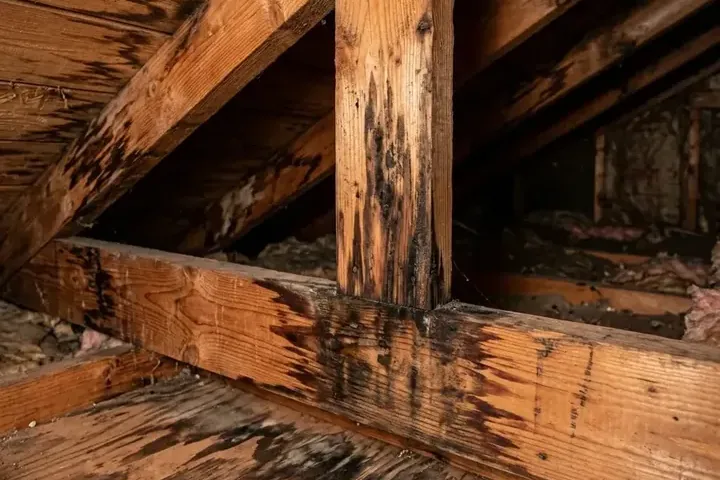
Roof leaks hide. Rain finds a gap, runs along rafters and drips onto insulation long before a ceiling shows a stain. By the time a spot appears, the damage above it is often much wider than the mark below.
First steps for roof leak water damage right now
- Find the path. The team traces the water from the stain, through the ceiling and attic, back to the roof opening.
- Open the wet layers. Insulation and soaked drywall come out where meters show water, and the cavity is left open to air.
- Dry the space. Air movers and dehumidifiers run through attic and rooms.
- Verify readings. Daily meter checks confirm the framing, ceiling and walls have returned to normal.
How roof leak water damage is handled, start to finish
Call and describe the stain
Tell dispatch where the stain is, how long it has been dripping and whether the roof was repaired or tarped. That shapes the first visit.
Moisture mapping
Meters and thermal imaging show wet areas in the ceiling, the walls and the attic, including spots with no visible stain.
Removal and drying
Wet insulation and soaked drywall come out, drying gear goes in, and the attic is ventilated.
Wrap up with records
Readings and photos are documented, and the scope is shared with the insurer and the roofer.
Why the wet season matters
Rain falls on an average of 63.7 days each year, and February is the wettest month with an average of 5.21 inches. That steady cycle of wet and dry wears on roofing, flashing and seams, and the heaviest storms find the weak points.
- Flashing and seams that loosen over many seasons
- Gaps around vents, skylights and chimneys
- Gutters and downspouts that overflow against the roof edge
- Storm debris that blocks water from running off
Berkeley hillside streets add steep rooflines, where runoff moves fast and finds gaps.
What drying involves
The drying team starts in the attic if access allows, because wet insulation holds water against the ceiling below. Meters and a thermal camera show where moisture sits.
- Wet insulation removed so it stops feeding the ceiling
- Water stained drywall cut where it is soaked or sagging
- Air movers and dehumidifiers placed in the attic and living space
- Readings checked daily until framing and drywall are normal
A roofer closes the leak itself, and the drying work should wait for a tarp or repair so new water does not undo it.
Contain the drip
Place a bucket under the leak and poke a small hole in a sagging ceiling bulge to let water out in a controlled way, if it is safe.
A roof leak keeps wetting insulation with every storm. Call any hour, describe the stain and when it rained, and the team will explain how the dry-out would proceed.
☎ Call about the roofWind and rain together
Storms with strong wind push rain sideways and under roofing that would stay dry in a quiet shower. After a storm, check ceilings in upper rooms, closets and the top of stairwells, because the first signs often appear far from the actual opening. Early notice limits how much insulation and drywall gets wet.
Insurance and the paper trail
Insurers want photos of the leak path, the stained ceiling and the roof condition. Keep the roofer's report. See also the Berkeley service hub and the roof leak overview for the broader dry-out.
What does roof leak water damage cost in Berkeley, CA?
Roof leak damage in Berkeley often costs $1,000 to $3,500 for one ceiling area, $3,500 to $8,000 for several rooms, and $8,000 to $18,000 when the leak is large or long running.
One ceiling area
- Small stain only
- Insulation check made
- Light drying plan
Several rooms
- Walls also wet
- Ceilings cut out
- More drying equipment
Large or long running
- Framing is wet
- Wide material removal
- Extended drying time
Ranges are typical, not a quote: the category of water, square footage, material class and how fast drying started move the number most. Run the water damage cost calculator for a closer range.
What a real dry-out involves here
Rapid local response
Dispatch runs 24/7, and active water in a condo, loft or office is treated as urgent at any hour, with extraction gear sized to the building.
IICRC S500 drying standard
Structural drying, not just surface drying: air movers and LGR dehumidifiers run to the evaporation load and stay until readings say dry.
Claim-ready documentation
Moisture maps, daily psychrometric logs and timestamped photos taken before any demolition go into one file for the adjuster and the HOA.
Emeryville water experts
Stacked units, older industrial shells, fill near the bayshore and tidal storm drains: the local restoration pros read how water moves here.
Roof leak water damage across Berkeley and nearby cities
The drying team handles roof leaks in Downtown Berkeley, Southside, Northside, North Berkeley, Westbrae and Northbrae houses, and on steep hillside streets around Cragmont, La Loma Park and Panoramic Hill, plus Thousand Oaks.
The same service nearby: roof leak water damage in Emeryville, Piedmont, San Pablo.
Related water damage services nearby
Roof Leak Water Damage questions in Berkeley, CA
How do I know a roof leak is still active?
Fresh drips, spreading stains and a damp attic after rain mean water is still entering. A roofer should check and close the opening before drying starts, so new rain does not undo the work.
Can wet attic insulation be dried in place?
Usually no. Wet insulation holds moisture and packs down, so it is removed and replaced.
Why does the ceiling stain keep growing?
Insulation above holds water and releases it slowly, and water travels along framing before it drips. The stain shows only the end of the path.
Who handles the roof repair?
A roofer closes the leak. The drying team removes water and dries the structure, and the two are coordinated.
Does insurance cover a roof leak?
Sudden storm damage is often covered, while wear and long term leaks may not be. Ask the insurer and keep photos.
How long does drying take?
Usually several days, depending on how much of the attic and ceiling got wet. Readings decide when it is done.
Can the ceiling fall after a leak?
Yes. A ceiling holding water can sag and drop wet drywall and insulation without warning. Keep clear of bulging spots and let the team relieve the pressure safely.
Can a roof leak cause mold?
It can in a closed, damp attic, which is why wet insulation comes out and the space is dried.
Get the attic and ceiling dry
Share where the stain showed up and when it rained, and the drying team will plan the attic work and the ceiling repairs.
(888) 774-9605Schedule the leak dry-out