Structural Drying Berkeley, CA
Water that soaks into framing, subfloors and drywall does not leave on its own. The drying team sets air movers and dehumidifiers and logs readings until the structure matches dry reference points.
(888) 774-9605Start the dry down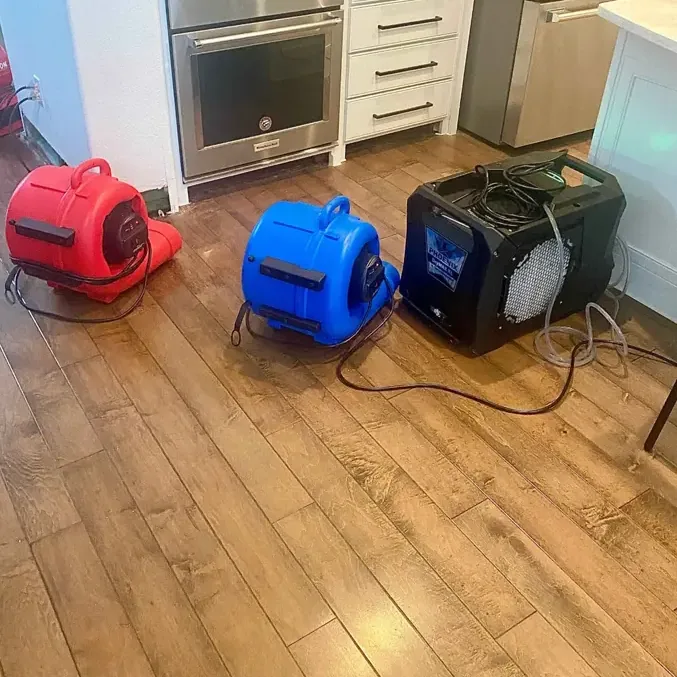
Berkeley receives 25.40 inches of rain in an average year, so wet framing is a regular concern here. Water that gets into a wall, subfloor or crawl area after a storm or a pipe failure has to be dried deliberately. Left alone, it lingers for weeks.
First steps for structural drying and dehumidification right now
- Place the equipment. Air movers and dehumidifiers are positioned room by room, based on the moisture map the team has drawn.
- Open key areas. Small openings and pulled baseboards let air reach wall cavities and the edges of floors.
- Read and adjust. Meters are checked each day and equipment is moved or added as the wet areas change.
- Confirm dry. Readings match dry reference points in unaffected areas before the equipment comes out.
How structural drying and dehumidification is handled, start to finish
Call with the water details
Explain what leaked, when it happened and which materials got wet. This helps set the class of the loss and the equipment list.
Moisture mapping
Meters and a thermal camera mark the wet extent in walls, floors and ceilings so equipment can be placed where it will work.
Drying phase
Air movers and dehumidifiers run, with readings taken and adjustments made each day until the numbers keep falling.
Final verification
When readings match dry references, the equipment is removed and the written log is delivered for the claim.
How drying actually works
Drying is controlled evaporation. Air movers push dry air across wet surfaces, and dehumidifiers pull the moisture out of the air so the process continues. Done right, the structure returns to its normal moisture content.
- Air movers across floors and walls lift moisture from surfaces
- Dehumidifiers remove the water vapor from the room
- Directed airflow reaches wall cavities through small openings
- Moisture meters track progress at set points each day
The equipment is placed and adjusted to the room, since too much or too little airflow slows the result.
Why the class of water damage matters
Drying plans vary by class. A Class 1 or 2 loss involves less water and slower evaporation, while Class 3 and Class 4 losses involve soaked ceilings, dense materials and deeply held water that need more equipment and time.
- Class 1 or 2: one area, limited materials
- Class 3: several rooms, water from above
- Class 4: dense materials such as hardwood and plaster
- Several units: shared walls and floors add scope
The classification affects equipment count, days on site and the final cost.
Keep the doors closed
Closed doors and windows help dehumidifiers work. Opening them lets humid outside air back in.
Wet framing keeps holding moisture until it is dried. Call any hour, describe what got wet and how long ago, and the response team will explain the drying plan.
☎ Call about dryingWhat stays out of the way
Drying equipment needs room, power and time. Air movers sit on floors and along walls, and dehumidifiers need a clear spot with a drain or a tank to empty. Furniture and rugs are lifted and propped so air can reach the floor beneath them. Carpet may be pulled back and dried in place, and baseboards removed so air reaches the cavity behind. Planning for this up front keeps the routine smooth and the days on site short.
Insurance and drying logs
Daily readings show an insurer that the work reached dry standards. More on the process is in the Berkeley service hub and the structural drying overview.
What does structural drying and dehumidification cost in Berkeley, CA?
Structural drying runs $1,200 to $3,500 for Class 1 or 2 in one area, $3,500 to $8,000 for Class 3, and $8,000 to $20,000 for Class 4 or several units.
Class 1 or 2, one area
- Few days of drying
- Limited equipment
- One affected area
Class 3, several rooms
- More equipment
- Longer drying time
- Wider moisture checks
Class 4 or several units
- Dense materials
- Extended timeline
- Shared structure
Ranges are typical, not a quote: the category of water, square footage, material class and how fast drying started move the number most. Run the water damage cost calculator for a closer range.
What a real dry-out involves here
Rapid local response
Dispatch runs 24/7, and active water in a condo, loft or office is treated as urgent at any hour, with extraction gear sized to the building.
IICRC S500 drying standard
Structural drying, not just surface drying: air movers and LGR dehumidifiers run to the evaporation load and stay until readings say dry.
Claim-ready documentation
Moisture maps, daily psychrometric logs and timestamped photos taken before any demolition go into one file for the adjuster and the HOA.
Emeryville water experts
Stacked units, older industrial shells, fill near the bayshore and tidal storm drains: the local restoration pros read how water moves here.
Structural drying and dehumidification across Berkeley and nearby cities
Structural drying work covers Downtown Berkeley, Southside, Northside, North Berkeley, Westbrae, Northbrae and Thousand Oaks properties, plus hillside houses at Cragmont, La Loma Park and Panoramic Hill, in older and newer buildings alike.
The same service nearby: structural drying and dehumidification in Emeryville, Piedmont, San Pablo.
Related water damage services nearby
Structural Drying and Dehumidification questions in Berkeley, CA
How long does structural drying take?
Usually several days, though dense materials or large losses can take longer. Meter readings decide, not the calendar.
Why are the machines so loud?
Air movers and dehumidifiers move large volumes of air. The noise is temporary and part of drying the framing, not a sign something is wrong. Earplugs or a quiet room away from the equipment help.
Can I turn off the equipment at night?
Not without slowing the drying, and ideally not at all. Running around the clock keeps moisture moving out, and stopping lets walls reabsorb it.
Does drying prevent mold?
Fast, complete drying removes the damp conditions mold needs, which is a main reason the work should begin quickly after a loss. Slow drying is where trouble starts.
What does the class number mean?
It reflects how much water and which materials are involved. Higher classes hold water more deeply and need more equipment and more days. Your team explains the class it assigned and why.
Will my electric bill go up?
Yes, somewhat, since the equipment runs for several days and draws real power. Ask the insurer whether the added electricity cost can be included.
How do I know it is dry?
The team compares readings to dry reference points in unaffected areas and logs the numbers daily, so you can see the trend and see the day they match.
Get the building dried properly
Describe what got wet and for how long, and the response team will set the equipment and the schedule.
(888) 774-9605Set up the drying