Structural Drying in Piedmont, CA
Structural drying removes moisture that stays in wood framing and walls after a leak, which matters in older houses built in the 1920s and 1930s. Air movers and dehumidifiers run until readings reach a dry range.
(888) 774-9605Plan the dry-out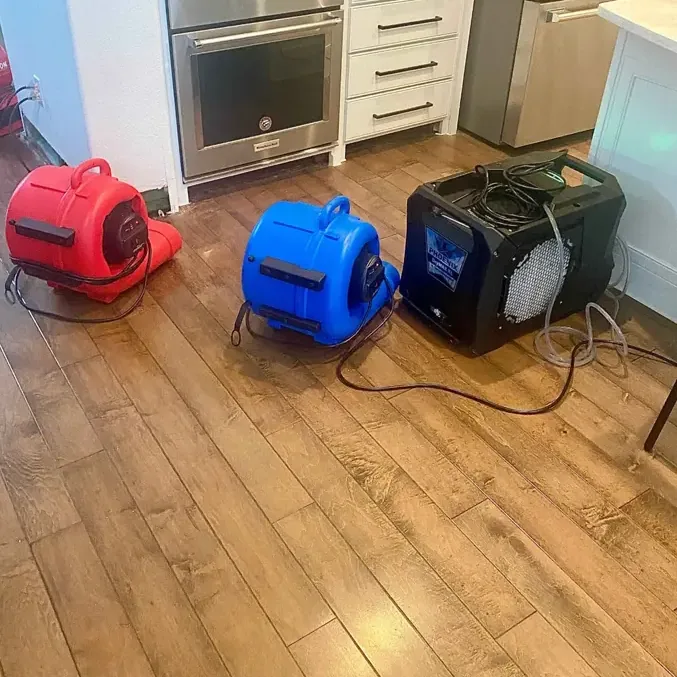
After standing water is gone, moisture remains in wood framing, subfloors, plaster and insulation. Structural drying removes that hidden moisture with controlled airflow and dehumidification, so walls and floors return to their normal condition instead of swelling, staining or growing mold. Many Piedmont houses date from the 1920s and 1930s, and older wood and plaster can hold water longer than newer materials. Layered floors, lath and thick framing dry slowly without proper airflow.
First steps for structural drying and dehumidification right now
- Get the water out first. Extraction should come before drying, so standing water does not slow the equipment.
- Do not move the equipment. Leave air movers and dehumidifiers in place, plugged in and running as set.
- Close doors and windows. Keeping the drying area closed helps the dehumidifiers work and keeps outdoor humidity out.
- Keep a log. Write down when equipment was turned on and any changes, to share with the adjuster.
How structural drying and dehumidification is handled, start to finish
Measure and classify
Meters and thermal images establish how wet each material is and which class of loss applies to the rooms. Photos are taken for the file.
Place the equipment
Air movers and dehumidifiers are set to match the rooms, the wall cavities and the materials involved.
Monitor daily
Readings are taken at the same points every visit, and the equipment is adjusted as materials dry out.
Confirm and remove
When readings reach the dry range, the equipment comes out and a final record is prepared for the file.
How drying equipment works
Air movers push dry air across wet surfaces and pull moisture out of materials, while dehumidifiers take that moisture out of the air so it cannot settle back. Meters track the progress at set spots each visit.
- Air movers placed along floors, walls and cavity openings
- Dehumidifiers sized to the volume of the affected rooms
- Thermal images that find damp areas behind finishes
- Moisture readings logged at the same points every visit
The setup changes as the building dries, since equipment that is no longer needed is moved or removed. That adjusting is why daily visits matter.
Classes of water damage
The S500 standard sorts losses into classes by how much moisture is in the materials. Higher classes need more equipment and more days.
- Class 1: little moisture in low absorbing materials
- Class 2: wet carpet, pad and lower walls
- Class 3: water from above, soaking ceilings, walls and floors
- Class 4: deep moisture in dense materials like hardwood and plaster
Meters and photos from the first visit establish the class, which sets the equipment and the expected schedule. Higher classes may also call for opening wall cavities or lifting floors.
Time matters for wet materials
Materials that stay wet beyond the first two days can begin to break down or grow mold, which is why drying begins as soon as the water is extracted and the structure is opened.
Moisture left in framing keeps causing damage over time, and the crew can explain how a dry-out will work. Phone help is open at any hour.
☎ Talk to the crewInsurance and drying records
Adjusters look at daily moisture logs, equipment counts and the final dry readings. The crew keeps these records for every visit, and you can keep your own photos of the setup and any removed materials as well. Ask for a copy of the final readings when the equipment comes out.
What does structural drying and dehumidification cost in Piedmont, CA?
Structural drying runs from $1,200 for one area to $20,000 for severe or multi-unit losses, with the cost following the class of water damage, equipment count and days of drying.
Class 1 or 2, one area
- Few air movers set
- One dehumidifier running
- Short monitoring period
Class 3, several rooms
- Multiple air movers
- Dehumidifiers placed
- Daily readings logged
Class 4 or several units
- Dense materials dried
- Extended equipment run
- Full documentation
Ranges are typical, not a quote: the category of water, square footage, material class and how fast drying started move the number most. Run the water damage cost calculator for a closer range.
What a real dry-out involves here
Rapid local response
Dispatch runs 24/7, and active water in a condo, loft or office is treated as urgent at any hour, with extraction gear sized to the building.
IICRC S500 drying standard
Structural drying, not just surface drying: air movers and LGR dehumidifiers run to the evaporation load and stay until readings say dry.
Claim-ready documentation
Moisture maps, daily psychrometric logs and timestamped photos taken before any demolition go into one file for the adjuster and the HOA.
Emeryville water experts
Stacked units, older industrial shells, fill near the bayshore and tidal storm drains: the local restoration pros read how water moves here.
Structural drying and dehumidification across Piedmont and nearby cities
Structural drying covers Piedmont houses and apartments from Alta Piedmont and The Highlands to the Highland Avenue and Exedra area, Blair Park, Dracena Quarry Park, Linda Avenue, Hampton Road, Sunnyside Avenue and Craig Avenue.
The same service nearby: structural drying and dehumidification in Emeryville, Berkeley, Orinda.
Related water damage services nearby
Structural Drying and Dehumidification questions in Piedmont, CA
How long does structural drying take?
Typically several days, but the time depends on the class of water damage and the materials. Dense hardwood and plaster take longest.
Why are dehumidifiers needed?
Air movers lift moisture into the air, and dehumidifiers pull it out so the water cannot settle back into the structure. Both machines work together.
Is the noise normal?
Yes. Air movers and dehumidifiers run all day and night, and the sound is part of the drying process. Most people get used to it quickly. A moderate hum is normal.
Does drying protect the structure?
Yes. Getting materials dry quickly removes the moisture that swelling, staining and microbial growth depend on.
How do readings show it is dry?
The crew compares each reading to a dry reference for that material and records the final numbers. Those numbers go in the file. Readings are compared again at the final visit.
Can the equipment be turned off early?
Stopping early can leave moisture in framing. The readings decide when it is safe to end. Early removal costs more later.
Will electricity use go up?
Yes, because the equipment runs continuously. Ask your insurer whether the added cost is included in the claim. Small openings can also be patched later.
Does every wet building need walls opened?
No. Meters decide. Small openings, removed baseboards or lifted panels often let air reach cavities without major demolition.
Dry the framing and floors fully
Tell the crew what happened and how many rooms are wet, and the equipment plan is set before work begins.
(888) 774-9605Set up the drying