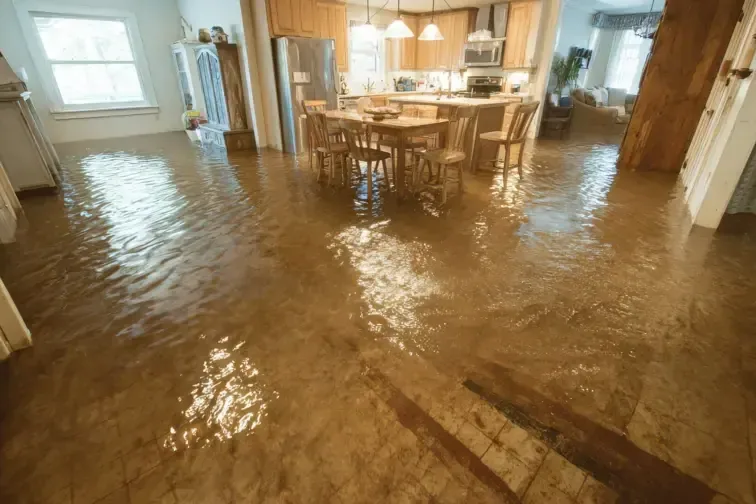
A garage sits at the lowest and most exposed edge of many hillside homes. When a water main breaks nearby, that is where the water tends to arrive. Orinda has had two well documented cases, and this article uses them to explain what homeowners can do and how extraction and drying work.
Key takeaways
- On May 2, 2016, an EBMUD main break flooded the garages of at least four homes.
- On March 1, 2018, a Moraga Way main break during heavy rain sent water into the yards of six homes.
- Both mains were 12 inch cast iron, and officials believed old age was the likely cause of the first.
- Removing standing water quickly protects shared walls, stored belongings and living space.
- Drying is measured with readings, not judged by eye.
Two Orinda main breaks worth knowing about
On May 2, 2016, an EBMUD water main break near the Lafayette Reservoir Recreation Area flooded the garages of at least four homes. It was a 12 inch cast iron transmission main, and officials believed old age was the likely cause.
On March 1, 2018, a water main break on Moraga Way during heavy rain collapsed part of the road and sent water into the yards of six neighboring homes. EBMUD said that main was also 12 inch cast iron, in an extremely high pressure zone.
The two incidents show a pattern. Water mains under pressure fail suddenly, and the damage lands on whatever sits downhill.
- 2016: garages of at least four homes flooded
- 2018: part of Moraga Way collapsed, six yards flooded
- Both involved 12 inch cast iron pipe
Why garages and yards get hit first
The town is hilly, with rolling oak covered hills, and homes range from ranch houses to larger estates on both hillside and flatter lots. Water from a break runs downhill and collects wherever the ground slopes toward a structure.
A garage door gives water an easy way in, and most garages are built to be hosed down rather than kept dry. Once the water passes the door it can spread into storage, shared walls and any door leading into the house.
Garages are also where many homeowners keep the water heater, a washer and a freezer. Water in that space can reach appliances and wiring quickly.
A raised threshold or a short curb at the door can slow water, but it will not stop a strong flow. Treat it as a speed bump, not a barrier.
- Driveways that slope toward the garage door
- Side yards that funnel water along the house
- Doors between the garage and living space
- Stored boxes, tools and paper goods on the floor
What to do in the first stretch
Stay out of the water if any electrical equipment, outlets or a panel are near it. Garage openers, freezers and chargers can all be hazards in wet conditions.
Then limit the spread and begin the record.
Protect the house
- Close the door between the garage and the house, and place towels at the threshold.
- Move items off the floor onto shelves or plastic bins.
- Photograph the water level on walls and stored items.
Call the right people
A main break is reported to the utility, which shuts off and repairs its pipe. Water already inside the property is handled separately by a water extraction team.
How the water gets removed
The extraction crew uses pumps for deep water and powerful vacuums for shallow layers. Water that sits under cabinets, shelves or in wall bases is pulled out as well.
Water from a street main can carry soil and debris, so floors are cleaned after the water is gone. Soaked cardboard and paper goods usually cannot be saved and are removed.
The earlier water comes out, the less it moves into the lower wall boards and the bottom of any wall shared with the house.
Where a garage has finished walls, water can wick upward inside the drywall. The bottom strip is often cut off so the cavity can dry, and the missing section is replaced later.
Rubber floor mats and wood pallets hold water against the floor. They should be lifted and cleaned or discarded.
Drying walls and floors
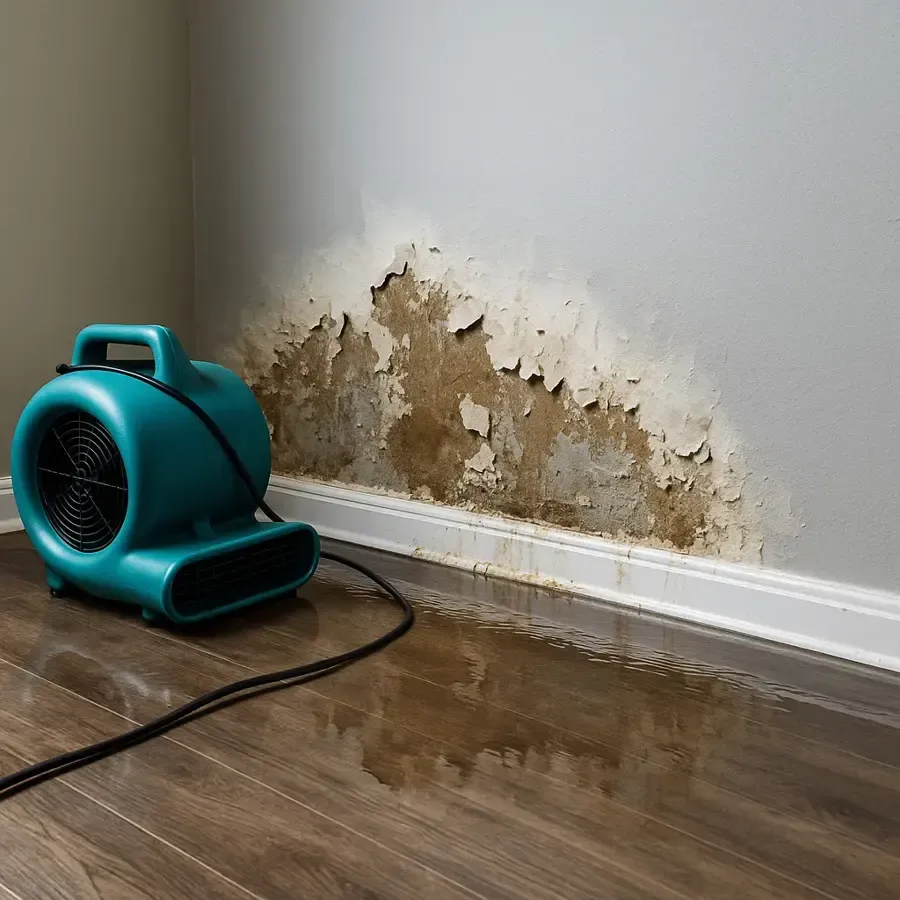
After extraction, the structural drying stage begins. The team uses moisture meters on lower drywall, wood framing and flooring to find water the eye cannot see.
Drying equipment is placed along affected walls, and baseboards or a strip of lower drywall may be cut away to let trapped moisture escape. Air movement and dehumidifiers run until readings match normal levels.
Leaving damp wall bottoms closed can lead to mold within a couple of days, so the checks continue until every reading is in range.
Appliances that were in the water, including freezers, refrigerators and chargers, should be checked by a technician before being used again. Do not plug them back in right away.
Finished garages with drywall, carpet tile or cabinets need more care than bare floors. The team removes wet cabinet bases and carpet pieces so the structure can breathe.
When water has reached a door into the house, the threshold and nearby baseboards get checked as well. A small amount of water at the door can wick into flooring beyond it.
- Moisture readings before and after each visit
- Equipment positioned along shared walls
- Baseboards removed to open the wall bottom
- Final readings written down for the owner
Heavy rain and main breaks together
The Moraga Way break of that year happened during heavy rain, which means saturated ground and runoff can add to the water. When storm water also enters, it is treated as dirty water.
The Orinda hub page lists the services that apply, including storm and flood cleanup when rain is part of the picture.
What owners can prepare in advance
No one can predict a main break, but a garage can be set up to take less damage. The same steps help with winter storm runoff.
They are simple and cost very little.
- Keep stored items on shelves rather than on the floor.
- Use plastic bins with lids for papers and keepsakes.
- Know where the electrical panel is and how to shut off power to the garage.
- Keep gutters and downspouts clear so rain runoff does not add to the problem.
- Take dated photos of the garage while it is in good condition.
Questions
Who handles water that enters my garage after a main break?
The utility repairs its pipe. Water inside the property is the owner's concern and is removed by an extraction crew.
Is the water from a main break dirty?
It starts as treated water but often picks up soil and debris, especially in yards and driveways.
How can I tell if the wall shared with the house is wet?
A moisture meter can show water inside drywall that looks normal. Staining, soft paint or a musty smell are clues.
What happens to stored boxes in the garage?
Soaked cardboard and paper usually cannot be saved. Plastic bins and hard items can often be cleaned and dried.
How long does drying take?
It depends on how much material is wet. Readings decide when the team is finished.
Does heavy rain make main break damage worse?
It can. The Moraga Way break happened during heavy rain, and storm runoff can add to the water on a property.