Ceiling Leak Damage Orinda
A stain or sag in the ceiling means water is trapped above it. Local water damage pros trace the source, release the water safely, cut out wet drywall and dry the joists and insulation.
(888) 774-9605Check the ceiling stain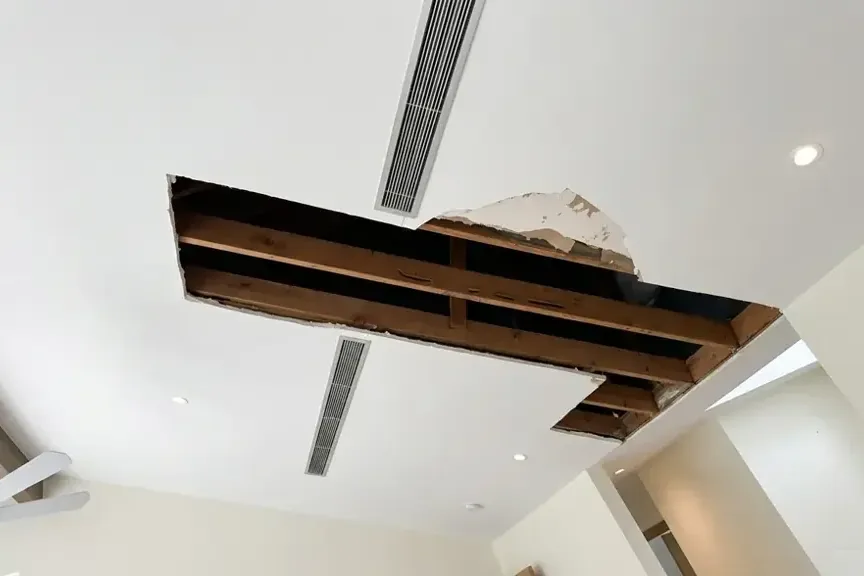
A ceiling leak is a symptom. Water is coming from the roof, an upstairs bathroom, a kitchen above or a supply pipe, and it collects in the insulation and drywall until the ceiling stains, bubbles or sags. The stain is usually smaller than the wet area behind it, so the crew checks beyond what can be seen from the room.
First steps for ceiling leak water damage right now
- Make it safe. Power is switched off to the room and any bulge is drained under control.
- Trace the source. Meters and thermal imaging follow the water back to the roof or the upstairs fixture.
- Open the ceiling. Wet drywall and insulation are cut out until the edges read dry.
- Dry and document. Air movers and dehumidifiers run until the joists reach dry targets, with photos for the file.
How ceiling leak water damage is handled, start to finish
Call and describe
The dispatcher asks about stains, sags and drips and explains how to keep the room safe until the crew arrives with meters and drying gear.
Trace and drain
The crew finds the source, drains any trapped water in a controlled way and checks the room for electrical hazards.
Cut and dry
Wet drywall and insulation come out, and air movers and dehumidifiers dry the framing and the room below.
Verify and hand off
Final readings and photos are given to you and your adjuster before any patching begins.
Why the wet season brings ceiling leaks
Winter rain tends to run heavier here than in surrounding areas, so roof leaks that stay quiet in dry months start dripping through ceilings from fall into spring. Leaks from upstairs plumbing do not follow the weather, but they cause the same stains and sags.
- A brown ring that spreads after each rain
- Paint that bubbles or peels on a ceiling
- A sagging panel that holds water in a bulge
- Drips from a light fixture or vent
Water that reaches a light fixture or an outlet is an electrical hazard, so the power to that room is switched off before the crew touches the ceiling.
How the ceiling is opened and dried
A sagging ceiling is released first. The crew pokes a small hole so the water drains into a bucket instead of coming down all at once, then cuts out the wet drywall until the edges are dry. Insulation above it is removed if it is soaked.
- Controlled drainage of any bulge
- Removal of wet drywall and insulation
- Joists and framing dried with air movers
- Dehumidifiers running in the room below
Once the source is found and stopped, the opening is dried and left ready for patching. If a roof opening is the cause, the roofing side is covered in roof leak water damage, and an upstairs source is covered in burst pipe water damage.
Stay out from under it
A bulging ceiling can release a lot of water and drywall at once. Keep people and pets out of the room until the crew has drained it.
A wet ceiling can fail without warning. Call and a local dispatcher will explain how to stay safe and send the crew.
☎ Call about the ceilingInsurance and ceiling leaks
Insurers want the source of the leak, so photograph the stain, the room above and any visible roof or pipe problem. Sudden leaks are often covered, while slow ones from wear may not be, so ask your carrier. The crew keeps moisture readings and a list of the materials removed for the file.
What does ceiling leak water damage cost in Orinda, CA?
A small ceiling stain often costs from $800 to $2,500 to dry, and the figure grows when walls are wet, the water is dirty or the leak reached the rooms or units below.
Small stain
- One ceiling patch
- Short drying visit
- Little removed
Ceiling and walls
- Wall tops wet
- Insulation removed
- More equipment days
Dirty water or several units
- Contaminated source
- Rooms below reached
- Extended documentation
Ranges are typical, not a quote: the category of water, square footage, material class and how fast drying started move the number most. Run the water damage cost calculator for a closer range.
What a real dry-out involves here
Rapid local response
Dispatch runs 24/7, and active water in a condo, loft or office is treated as urgent at any hour, with extraction gear sized to the building.
IICRC S500 drying standard
Structural drying, not just surface drying: air movers and LGR dehumidifiers run to the evaporation load and stay until readings say dry.
Claim-ready documentation
Moisture maps, daily psychrometric logs and timestamped photos taken before any demolition go into one file for the adjuster and the HOA.
Emeryville water experts
Stacked units, older industrial shells, fill near the bayshore and tidal storm drains: the local restoration pros read how water moves here.
Ceiling leak water damage across Orinda and nearby cities
The drying team covers Sleepy Hollow, Glorietta, Del Rey, Ivy Drive, Wilder, Wagner Ranch, El Toyonal, Spring Oak and Lost Valley, along with homes near Moraga Way and State Route 24 in Orinda.
The same service nearby: ceiling leak water damage in Emeryville, Piedmont, Berkeley.
Related water damage services nearby
Ceiling Leak Water Damage questions in Orinda, CA
What should I do if my ceiling is sagging?
Keep people out from under it, switch off the power to that room and call a crew to drain and open it safely before it lets go on its own. Never poke a bulge while standing under it.
Where is the water coming from?
Usually the roof or a pipe above the ceiling. The crew traces it with meters and a thermal camera before cutting more drywall than needed.
Does the whole ceiling have to come down?
Rarely. Only the wet sections are cut out, and the edges are checked with a meter until the remaining drywall reads dry. That keeps repair costs lower and saves the rest of the ceiling.
Can a ceiling stain come back after painting?
Yes. Paint hides the mark but not the moisture, so the framing must be dried and the source repaired before any finish work.
Does insurance pay for ceiling water damage?
Sudden leaks are often covered, while slow ones from wear may not be. Your insurer can tell you what applies to your policy and your deductible. Photos taken before anything is cut help the claim.
Could mold grow above the ceiling?
It can if insulation and drywall stay wet, so wet materials are removed and the cavity is dried quickly and checked afterward. Mentioning it early helps the crew plan the airflow.
Does the crew fix the roof or pipe?
No. A roofer or plumber repairs the source, and the crew dries the damage so the repairs can be closed up on dry framing. The crew coordinates with them so the dry-out and repair fit together.
Ceiling dripping or sagging?
Reach the dispatcher and the drying team will explain how to keep the room safe.
(888) 774-9605Plan the ceiling dry-out