Commercial Water Damage in Piedmont, CA
Commercial water damage in Piedmont involves small buildings such as the Highland Avenue grocer-deli, banks and service station, plus schools and city facilities. The crew plans phased drying that limits disruption to staff and customers.
(888) 774-9605Shield the shop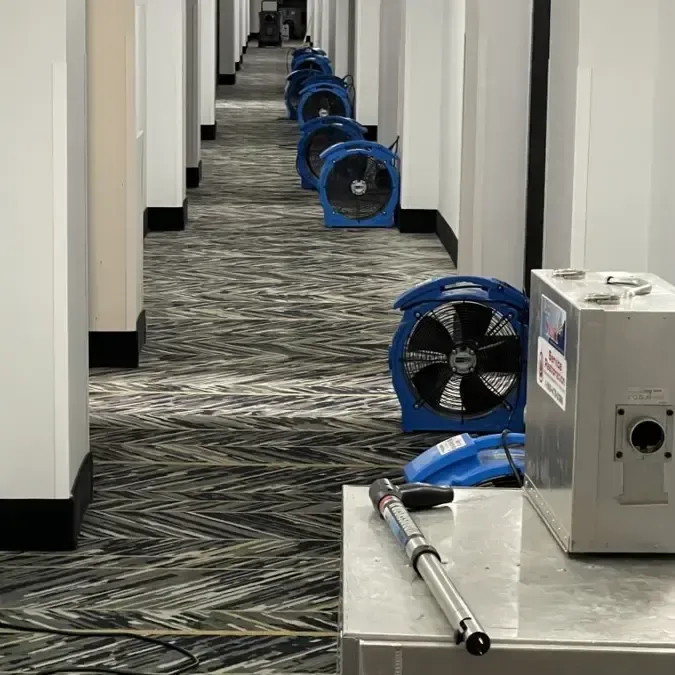
The small Highland Avenue shopping hamlet near the Exedra has a grocer-deli, a service station and three banks, and the city also has schools and public buildings. A pipe failure or storm leak in any of them affects stock, equipment, staff and customers at once, so commercial water damage work focuses on speed, containment and clear records. Schools such as Havens Elementary School and Beach School, and city offices, add public access to the list.
First steps for commercial water damage right now
- Shut off the source. Close the water valve or stop the leak so no more water enters the space.
- Protect stock and equipment. Move inventory, electronics and records above the water and cover what cannot move.
- Photograph the loss. Capture the damaged areas, stock and equipment before cleanup begins.
- Call the crew. Describe the building and the extent of the water so a plan can be made for the right equipment.
How commercial water damage is handled, start to finish
Assess and protect
The crew surveys the building, protects contents and sets priorities with the owner or manager. Priorities are written down.
Extract and contain
Water is removed from floors and storage, and zones are sealed where drying needs control.
Dry in phases
Air movers and dehumidifiers go into the wettest zones first and move as readings improve.
Document and release
Readings and photos are shared with the owner and insurer, and each zone is released when dry. Everyone receives the same records.
How commercial jobs differ
Commercial spaces have larger floor areas, shared walls, stock and equipment that cannot sit in water, and owners who need to reopen. The plan therefore starts with what must be protected and what can wait.
- Inventory and equipment moved or covered before extraction
- Water removed from floors, carpet and storage areas
- Drying zones set up so the open parts of the business can run
- Documentation of losses for the owner, landlord and insurer
Tenant, landlord and insurer often share responsibility, so the records should be clear about which space and which materials were affected, and that each party gets a copy.
Phased drying plans
Large rooms are divided into zones. The wettest zones are dried first, and equipment is moved as readings improve, which keeps the schedule short and the power bill reasonable.
- Moisture mapping across floors, walls and ceilings
- Zones sealed with plastic where needed
- Air movers and dehumidifiers placed by zone
- Readings logged so each zone can be released as it dries
Work can be scheduled around opening hours where the damage allows, and the owner receives updates on each zone as the readings improve.
Public buildings
Schools and city facilities have extra rules for access and safety. The crew coordinates with building staff before work starts and keeps hallways and entrances clear.
Water in a shop or office costs more the longer it sits, and the crew can talk through the priorities. Phone help is open at any hour.
☎ Talk to the crewInsurance for businesses
Business policies may include property, contents and business interruption sections. Photograph damaged stock and equipment, keep inventory lists and receipts, and ask your insurer which sections apply to the loss before cleanup is finalized.
What does commercial water damage cost in Piedmont, CA?
Commercial water damage typically runs from $3,000 for one suite or shop to $100,000 for several floors, depending on floor area, materials and the amount of contents involved.
One suite or shop
- Water extracted
- Zone dried fully
- Moisture records kept
A floor or several suites
- Phased drying
- Contents moved
- Daily readings
Several floors
- Large drying setup
- Extended schedule
- Full claim records
Ranges are typical, not a quote: the category of water, square footage, material class and how fast drying started move the number most. Run the water damage cost calculator for a closer range.
What a real dry-out involves here
Rapid local response
Dispatch runs 24/7, and active water in a condo, loft or office is treated as urgent at any hour, with extraction gear sized to the building.
IICRC S500 drying standard
Structural drying, not just surface drying: air movers and LGR dehumidifiers run to the evaporation load and stay until readings say dry.
Claim-ready documentation
Moisture maps, daily psychrometric logs and timestamped photos taken before any demolition go into one file for the adjuster and the HOA.
Emeryville water experts
Stacked units, older industrial shells, fill near the bayshore and tidal storm drains: the local restoration pros read how water moves here.
Commercial water damage across Piedmont and nearby cities
Commercial water damage work covers Piedmont businesses, schools and public buildings, including streets such as Highland Avenue near the Exedra area, Moraga Avenue, Hampton Road, Linda Avenue, Sunnyside Avenue and Craig Avenue.
The same service nearby: commercial water damage in Emeryville, Berkeley, Orinda.
Related water damage services nearby
Commercial Water Damage questions in Piedmont, CA
Can a business stay open during drying?
Often, in part. Zones are sealed so unaffected areas can keep running, depending on the extent of the water. Plans depend on the building.
Who handles inventory and equipment?
Owners decide what to move or discard, and the crew documents the condition of items for the insurer. Photos of stock help the claim. Lists should note quantities.
How is a school or public building handled?
The crew coordinates with building staff on access and safety, and keeps entrances and hallways clear. Staff are updated daily.
How long does commercial drying take?
Usually several days, but large buildings and dense materials can take longer. Phasing keeps parts of the space in use. Updates are shared on each zone.
Does insurance cover business interruption?
Some policies include it. Ask your insurer which sections apply and keep records of lost days. Keep dated notes on closures.
Can drying happen after hours?
Where the damage allows, work can be scheduled around opening hours, and equipment can run overnight. Noise limits can be discussed. Plans are written down first.
Who pays, the tenant or the landlord?
That depends on the lease and the policy, so check both and keep the records clear about the affected space. A written note avoids disputes.
Get the building dried in phases
Tell the crew about the building, the water source and the stock at risk, and a phased plan can be built.
(888) 774-9605Plan the commercial dry-out