Commercial Water Damage Tiburon, CA
Shops and restaurants along the main boulevard and in the waterfront core lose business when water stops them from opening. The crew in Tiburon plans quick, low disruption drying around the business. Moisture readings and photos are kept for the claim.
(888) 774-9605Dry the shop quickly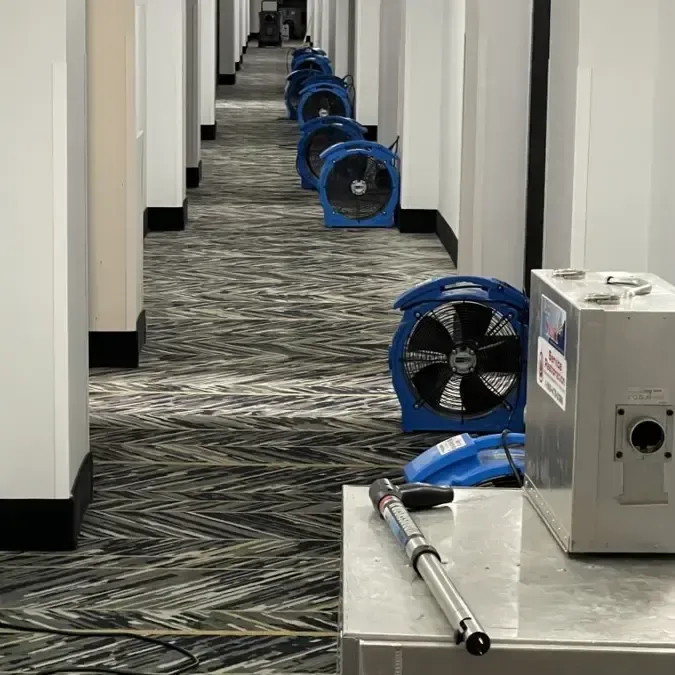
A business with a wet floor loses revenue every hour it stays closed. The goal is drying that is quick, planned around staff and customers, and documented well enough for a business claim. Whether the water came from a pipe, kitchen equipment or a leaking roof, quick action decides how much of the space can reopen sooner.
First steps for commercial water damage right now
- Walk the space. The crew and the manager look over the wet area and plan around hours. before work begins
- Extract the water. Pumps and vacuums remove water from floors and low areas. and low spots
- Place the equipment. Air movers and dehumidifiers go in without blocking the business.
- Verify and report. Readings are logged and a summary is prepared for the claim. for the insurer
How commercial water damage is handled, start to finish
Plan the access
The crew learns the hours and entrances and the areas that matter most to the business. Keys and alarm access are arranged.
Remove the water
Standing water is extracted and wet materials such as carpet and ceiling tiles are removed. Wet stock and files are moved first.
Dry in phases
Equipment is set up in phases to protect the sales floor first. Noise and air movement are kept away from customers.
Report and close
Final readings and photos are put into a summary for the insurer.
Planning around the business
The crew walks the space with the owner or manager and plans where equipment goes and when noisy work happens. Owners are told what will be loud, what will be blocked and what stays open.
- Equipment is placed to keep entrances and walkways open
- Work is phased to protect sales areas first
- Dehumidifiers and air movers are sized for large rooms
- Moisture readings are logged for each space
Along the main boulevard and in the waterfront core, shops and restaurants often sit close together, so the work is kept contained and dust, noise and moisture stay out of neighboring spaces.
Common commercial sources
Water in a business can come from several places, and each shapes the plan.
- Burst or leaking supply pipes in walls and ceilings
- Dishwasher, ice machine and kitchen equipment leaks
- Roof leaks over sales floors and offices
- Storm water through doors and loading areas
Clean water is handled differently from contaminated water. Drying uses structural drying, and standing water is removed through water extraction. Ceiling tiles, carpet tiles and drywall that held water are removed first so the rest can dry.
Think about inventory
Moving stock, files and electronics to dry ground early protects them while the crew works. Photographing shelves and equipment before moving them supports an inventory claim.
A wet business loses time and sales. Call and describe the space so the crew can plan low disruption drying. Quick action limits the loss.
☎ Call about the shopInsurance and business losses
A commercial claim often needs the loss time, the equipment used and the affected area. Photos, readings and a clear log help an adjuster. The business owner should also confirm the policy terms with the insurer. The standard commercial process is followed for records. Business interruption terms differ between policies, so they are worth reading early.
What does commercial water damage cost in Tiburon, CA?
One suite or shop often costs $3,000 to $10,000, while a floor or several suites cost more and several floors cost the most. Business hours and the tenant mix shape the plan.
One suite or shop
- Single space
- Quick extraction
- Low disruption
A floor or several suites
- Several spaces
- More equipment
- Phased drying
Several floors
- Multiple levels
- Specialty drying
- Extended monitoring
Ranges are typical, not a quote: the category of water, square footage, material class and how fast drying started move the number most. Run the water damage cost calculator for a closer range.
What a real dry-out involves here
Rapid local response
Dispatch runs 24/7, and active water in a condo, loft or office is treated as urgent at any hour, with extraction gear sized to the building.
IICRC S500 drying standard
Structural drying, not just surface drying: air movers and LGR dehumidifiers run to the evaporation load and stay until readings say dry.
Claim-ready documentation
Moisture maps, daily psychrometric logs and timestamped photos taken before any demolition go into one file for the adjuster and the HOA.
Emeryville water experts
Stacked units, older industrial shells, fill near the bayshore and tidal storm drains: the local restoration pros read how water moves here.
Commercial water damage across Tiburon and nearby cities
The crew handles commercial losses along Tiburon Boulevard and Main Street, in the waterfront core, Point Tiburon, Hilarita and Strawberry, as well as nearby offices, cafes, restaurants and shops across the peninsula.
The same service nearby: commercial water damage in Emeryville, San Pablo, Berkeley.
Related water damage services nearby
Commercial Water Damage questions in Tiburon, CA
Can a business stay open during drying?
Often, in part. Equipment is placed to keep walkways and entrances open, and work is phased around the busiest areas. Customers are directed around drying equipment.
What commercial sources of water are common?
Pipes, kitchen equipment, roofs and storm water through doors are common. Each shapes the plan differently. Roof leaks and storm water add to the list.
How are restaurants handled?
Kitchens and dining areas are protected first, with food areas cleaned and dried and equipment placed to limit noise. Surfaces are cleaned and disinfected before reopening.
Do tenants need separate plans?
Several suites may need separate readings and plans. The crew maps each space and logs each one. Shared walls and ceilings are checked for spread between suites.
What records support a business claim?
Photos, moisture readings, the equipment log and a list of removed materials help an adjuster understand the loss. Dates and times of the loss are noted as well.
Is structural drying needed after extraction?
Yes. After water extraction, structural drying removes moisture left inside walls and floors. Dehumidifiers are sized for larger commercial rooms.
How long does it take?
It depends on the size of the space and the materials. Readings decide the end date. A large space with dense materials takes longer than a small shop.
Get the space dried with low disruption
Describe the space and the water by phone and the crew will plan extraction and drying around the business.
(888) 774-9605Plan the business dry-out