Structural Drying Tiburon, CA
Homes near the bay hold moisture, and framing and subfloors can stay wet long after the surface looks fine. The drying team in Tiburon dries them with air movers and dehumidifiers. Readings steer the work.
(888) 774-9605Begin the drying work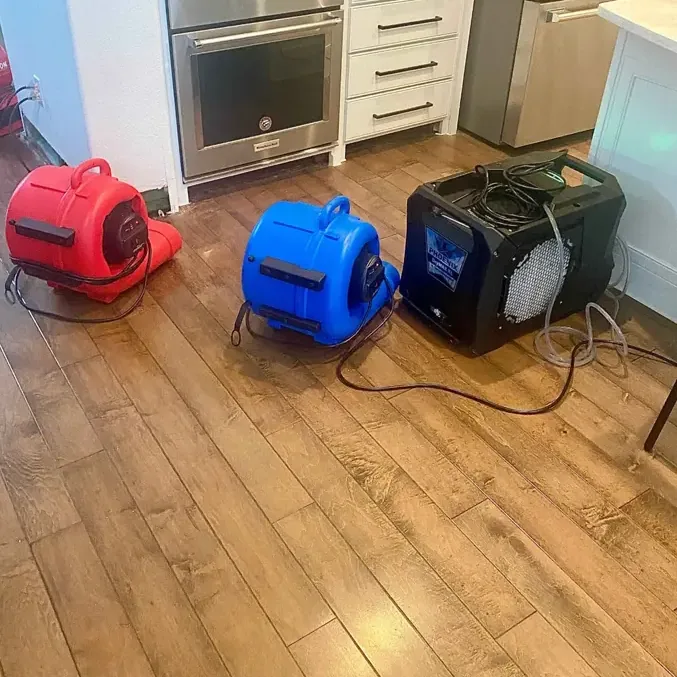
Taking out standing water is only half of a dry-out. Wood, drywall and insulation keep moisture inside, and homes near San Francisco Bay and Richardson Bay already carry humid air, so the structure is dried on purpose with equipment and measured readings, not left to air out. Wet framing left alone can warp, swell and slowly decay, so measured drying protects the home.
First steps for structural drying and dehumidification right now
- Map the wet area. Meters mark which materials are wet and by how much. and recorded
- Set the equipment. Air movers and dehumidifiers are placed to match the wet area. and the room size
- Track the readings. Moisture is checked at each visit and equipment is adjusted. and the notes are saved
- Confirm the goal. Final readings match the dry goal, and equipment comes out.
How structural drying and dehumidification is handled, start to finish
Take starting readings
The crew records moisture in framing, drywall and subfloor to set the baseline. Photos are taken of every wet area.
Place the equipment
Air movers and dehumidifiers go in where air must reach the wet materials. Doors and vents are managed to hold humidity down.
Check and adjust
Readings are logged at each visit, and equipment is moved as areas dry. The log notes temperature and humidity as well.
Verify and close
Final readings are compared with the goal and the log is saved for the claim. Equipment is removed only then.
How the drying works
Air movers push dry air across wet surfaces while dehumidifiers pull the moisture out of the air. Equipment placement follows the wet area, not a fixed pattern.
- Air movers are placed to move air across floors, walls and open cavities
- Dehumidifiers keep the humidity low so moisture leaves the materials
- Wet baseboards and drywall edges are opened where air cannot reach
- Readings are taken at each visit to track the drying curve
Equipment is adjusted as materials dry so energy and time are not wasted.
Drying classes and goals
The drying plan depends on how much water the materials hold, which the class number describes. Larger classes need more equipment and more days.
- Class 1 and 2 involve less wet material and a smaller area
- Class 3 involves water from above, with walls and ceilings wet
- Class 4 involves dense materials such as hardwood or concrete
- A dry goal is set from unaffected materials in the home
Readings come down toward the goal, and equipment stays until the goal is met. Water that is still standing needs water extraction first, and wet ceilings tie into ceiling leak work. Equipment is removed only after the final readings are recorded.
Dry means measured
A surface that feels dry can still hold moisture inside the framing, which is why readings, not touch, decide when the equipment leaves. Meters give a number where touch gives only a guess.
Wet framing and subfloors can hold moisture for a long time. Call and describe the loss so the team can plan the drying work.
☎ Call about dryingInsurance and drying logs
The daily log is the main record of the drying. It shows the starting readings, the equipment used and the final readings. Adjusters use it to understand the work, and it helps when they ask how long the drying took. Confirm what the policy covers with the insurer. The crew follows the structural drying records process. Keeping every log entry together makes the file easy to read.
What does structural drying and dehumidification cost in Tiburon, CA?
Class 1 or 2 drying in one area usually costs $1,200 to $3,500, while Class 3 across several rooms or Class 4 work costs more. Materials set the days.
Class 1 or 2, one area
- One area wet
- Light equipment
- Short run
Class 3, several rooms
- Walls and ceilings wet
- More equipment
- Longer run
Class 4 or several units
- Dense materials
- Specialty drying
- Extended monitoring
Ranges are typical, not a quote: the category of water, square footage, material class and how fast drying started move the number most. Run the water damage cost calculator for a closer range.
What a real dry-out involves here
Rapid local response
Dispatch runs 24/7, and active water in a condo, loft or office is treated as urgent at any hour, with extraction gear sized to the building.
IICRC S500 drying standard
Structural drying, not just surface drying: air movers and LGR dehumidifiers run to the evaporation load and stay until readings say dry.
Claim-ready documentation
Moisture maps, daily psychrometric logs and timestamped photos taken before any demolition go into one file for the adjuster and the HOA.
Emeryville water experts
Stacked units, older industrial shells, fill near the bayshore and tidal storm drains: the local restoration pros read how water moves here.
Structural drying and dehumidification across Tiburon and nearby cities
The drying team works in Old Tiburon, Point Tiburon, Bel Aire, Belveron Gardens, Hawthorne Terrace, Del Mar, Reed Heights, Reedland Woods, Cypress Hollow, Strawberry and Paradise Cay near the bay. Both bay shorelines are covered.
The same service nearby: structural drying and dehumidification in Emeryville, San Pablo, Berkeley.
Related water damage services nearby
Structural Drying and Dehumidification questions in Tiburon, CA
Why dry the structure after the water is gone?
Framing and subfloors hold moisture inside, and leaving them wet can lead to mold and rot. Controlled drying removes that moisture. Rot and warping are the usual long term results.
How is dry decided?
A goal is set from unaffected materials in the home, and readings are taken until the wet materials match it. The final goal is documented in the log.
Do bay conditions matter?
Homes near San Francisco Bay and Richardson Bay carry humid air, so dehumidifiers matter in keeping the air dry enough for materials to release moisture. Rooms are kept closed during drying to hold the humidity in check.
What do the classes mean?
They describe how much water the materials hold. Class 1 and 2 are lighter losses, Class 3 involves water from above and Class 4 involves dense materials. The class sets how much equipment is needed.
Can the equipment be turned off early?
Not until readings reach the goal. Stopping early can leave moisture inside the framing. Stopping early also means a return visit.
Is structural drying the same as extraction?
No. Water extraction removes liquid water, while structural drying removes the moisture left inside the materials. Most jobs use both in sequence.
How long does it take?
It depends on the class and the materials, and readings decide the end date. The drying typically runs several days. Larger or denser materials take longer.
Dry the structure to a measured goal
Describe what got wet and for how long, and the drying team will plan equipment and a reading schedule.
(888) 774-9605Plan the structural dry-out